
So Much More Than a Single Word
Most of us grew up believing consent was simple: yes means yes, no means no. Done. But if you have ever felt tongue-tied in a conversation, nodded along when you really wanted to speak up, or agreed to something and immediately felt a quiet unease in your chest, you already know that consent is far more nuanced than a single syllable.
Consent is not just a legal threshold or a one-time checkbox. It is a living, breathing quality of communication that runs through every meaningful interaction in your life, from intimate relationships and medical decisions to friendships, family dynamics, and even the workplace. When we learn to give and receive it with clarity and kindness, everything changes: trust deepens, resentment loosens its grip, and relationships become genuinely safer to inhabit.
This article is an invitation to rethink what consent actually looks like in practice and to build the communication skills that make it feel natural rather than awkward.
Why This Conversation Matters More Than Ever
There is a quiet epidemic of boundary confusion playing out in homes, workplaces, and relationships everywhere. People over-commit and burn out. They stay silent when they are uncomfortable. They say yes to keep the peace and then quietly resent the person they said yes to. Others genuinely do not know how to ask for what they need without feeling demanding or difficult.
The cost of poor consent communication is not always dramatic. Sometimes it is just a creeping erosion of trust, of self-respect, of connection. Research in relationship psychology consistently shows that couples and close relationships characterized by open communication around needs and boundaries report significantly higher satisfaction and resilience. When people feel genuinely free to say no, their yes becomes far more meaningful and trustworthy.
At a neurological level, feeling coerced or overridden, even subtly, activates the brain’s threat response. Cortisol rises. The nervous system shifts into protective mode. Over time, chronic experiences of boundary violation, even low-grade ones, can contribute to anxiety, emotional fatigue, and a diminished sense of self. Learning to communicate consent clearly is not just good manners; it is genuinely protective of mental and physical health.
What Is Actually Happening in the Brain When We Say Yes or No
Understanding the biology of consent helps explain why the “just speak up” advice falls flat for so many people.
The brain runs a near-constant evaluation of social risk. In any given interaction, your nervous system is asking: Is this safe? Will I be rejected? Will this person be angry with me? This process is largely unconscious and rooted in ancient survival wiring. When the perceived cost of saying no feels high, whether that is disapproval, conflict, or rejection, the brain’s threat circuitry can override your ability to voice what you actually want.
This is sometimes called fawning: defaulting to agreement as a way of managing threat. It is not weakness or dishonesty. It is a learned protective response, often developed in environments where boundaries were not well-received. For many people, the body physically tenses when trying to say no, with shallow breathing, throat or chest tightening, and a racing pulse. These are real physiological barriers to honest communication, not character flaws.
On the flip side, when someone feels emotionally safe enough to express a genuine preference and has that preference met with respect, the brain’s reward circuitry responds. Oxytocin, the bonding hormone, is released. Trust is reinforced. Over time, environments of mutual, freely given consent quite literally rewire the nervous system toward greater openness and ease.
This is why the goal is not just to know how to communicate consent; it is to create the kind of relational safety where it feels possible to do so.
The Art of Saying No (Without the Drama)
Let us start with the skill most people find hardest: declining clearly and kindly.
You do not owe anyone an elaborate explanation. A no is a complete sentence. That said, for most real-world relationships, a brief acknowledgment goes a long way toward making a refusal feel connected rather than cold.
Try these structures:
“That does not work for me, but thank you for asking.”
“I am not up for that right now.”
“I need to pass on this one.”
“I want to be honest; I would rather not.”
What you will notice is that none of these begin with “I’m sorry.” Apologizing for having a preference subtly communicates that your needs are an inconvenience. They are not. Starting with “I” rather than “sorry” is a small shift with surprisingly large implications for how you feel about yourself after the conversation.
For situations where you feel genuine conflict, where you want to say no but you also want to help, a partial yes is often more honest than a reluctant full yes:
“I cannot do all of that, but I could help with this part.”
“I am not available this week, but I could revisit it next month.”
Declining something is an act of integrity. It also protects the other person from a half-hearted, resentful version of the help they asked for.
How to Ask in Ways That Invite an Honest Answer
Here is a truth many people do not realize: the way you ask matters as much as what you are asking. Certain questions, however well-intentioned, make it structurally harder for the other person to say no.
“You don’t mind, do you?” is a classic example. The phrasing implies the expected answer is “of course not.” Someone with any tendency toward people-pleasing will often agree, regardless of how they actually feel.
Compare that with: “I would like to ask you something, and I want you to know it is genuinely okay to say no.” This is not just a courtesy phrase; it actively lowers the social cost of refusal and signals that you value their honest answer more than the outcome you are hoping for.
Other habits that invite honest responses include giving people time. Asking in the moment, with expectation in your voice, or in front of a group watching, can create social pressure. Where possible, give people space to reflect before answering. Avoid stacking questions. “Would you be okay with this, and also that, and while we are at it, one more thing?” buries individual needs in a pile. Ask about one thing at a time.
Accept the first answer. Asking again after a no, pushing gently, reframing, waiting, and trying again communicates that the no was not really an acceptable answer. Over time, this trains the people around you not to bother saying it. Check in rather than assume. Ongoing consent, especially in close relationships, is not something established once and filed away. Circumstances change. How someone felt about something last year may not be how they feel today. Asking “Is this still working for you?” is a genuine gift.
Navigating the Hardest Conversations: When It Gets Complicated
Some consent conversations carry real emotional weight, and they deserve more than a formula.
When someone overrides your no, it happens in a thousand small ways: a friend who keeps offering food after you have declined, a colleague who keeps pressing on a request, a partner who sulks when you are not in the mood for something. The key is clarity without escalation. A calm, firm restatement, such as “I have said no, and I need that to be respected,” is not aggression. It is self-advocacy.
When you change your mind, remember that you are allowed to. A yes does not bind you indefinitely, and a no is also reversible. What helps is communicating the change directly, rather than hoping the other person will intuit your shift. Saying “I said I would come tonight, but I am not feeling up to it. Can I take a rain check?” is clear and kind.
When you are not sure what you want, know that this is far more common than most communication advice acknowledges. “I need some time to think about it” is a completely valid response, not a delay tactic, but an act of honest self-awareness. You cannot meaningfully consent to something when you genuinely do not know how you feel about it.
When the stakes are high and emotions are running high, consent conversations around major decisions such as medical treatment, relationship changes, or significant financial commitments are often held in states of stress or urgency. Slowing down and naming that is helpful. Saying “I want to give this a real answer, not just an immediate one. Can we come back to it tomorrow?” is reasonable and responsible.
The Lifestyle Foundation: Habits That Make Honest Communication Easier
How easily you can speak up or hear a no is not just about communication technique. It is also about the state of your nervous system on any given day.
Sleep is non-negotiable. The prefrontal cortex, the brain region most involved in communication, social nuance, and emotional regulation, is profoundly sensitive to sleep deprivation. When you are chronically under-slept, the capacity to hold a difficult conversation with care and clarity is genuinely compromised. Adults typically need seven to nine hours for optimal function.
Regulate before you communicate. If you are already activated, whether anxious, angry, or overwhelmed, it is worth giving your nervous system a moment before jumping into a sensitive conversation. A few minutes of slow, deep breathing with an extended exhale activate the parasympathetic nervous system and measurably reduces cortisol. You will find your words more easily and listen more generously when you are calmer.
Practice in low-stakes situations. Like any skill, expressing preferences and declining requests gets easier with repetition. Saying “Actually, I would prefer the other one” when a friend asks where you would like to eat is a small practice with genuine long-term value.
Understand your own patterns. Do you tend to over-agree? Go silent? Get sharp or defensive when someone says no to you? These patterns usually have roots, often in early family dynamics or past relationships. Noticing your pattern without judgment is the beginning of changing it. Therapy, journaling, or honest conversations with trusted friends can all help here.
Move your body. Physical activity is one of the most reliable regulators of the stress response. Regular movement helps keep baseline cortisol lower and maintains the kind of nervous system flexibility that makes honest communication feel less threatening.
Nutritional and Supplement Support for the Nervous System
While no supplement replaces the relational and psychological work of building communication skills, there is real science behind supporting the neurological foundations that make it easier. Stress, anxiety, and an overactive threat response are all fundamentally physiological, and the body needs specific nutrients to keep those systems functioning well.
Magnesium plays a central role in regulating the nervous system and is one of the most commonly depleted minerals in modern diets. It supports GABA receptor function, GABA being the brain’s primary calming neurotransmitter, and a deficiency is associated with heightened anxiety and poor stress tolerance. Magnesium glycinate and magnesium bisglycinate are among the most bioavailable and gentle forms available.
B vitamins, particularly B6, B9 (folate), and B12, are essential cofactors in the synthesis of neurotransmitters, including serotonin, dopamine, and GABA. Chronic stress depletes B vitamins rapidly, which can contribute to mood instability and the kind of emotional reactivity that makes hard conversations feel even harder.
Adaptogens such as ashwagandha have a well-established body of evidence supporting their role in reducing cortisol levels and improving stress resilience. Several well-designed clinical trials have demonstrated meaningful reductions in perceived stress and anxiety scores with consistent ashwagandha supplementation.
Omega-3 fatty acids, specifically EPA and DHA, are structural components of neuronal cell membranes and have been associated with reduced inflammation, improved mood, and better emotional regulation. They are consistently low in Western diets and are well supported by the research literature.
L-theanine, an amino acid found in green tea, promotes a state of calm alertness without sedation, making it particularly useful for supporting composed, clear-headed communication in stressful situations.
As always, quality matters enormously when it comes to supplements. Look for products that are third-party tested, use bioavailable forms, and are free from unnecessary fillers and additives.
The Short Version
Consent is one of the deepest expressions of respect, for yourself and for others. It is not a single conversation or a binary switch. It is an ongoing practice of saying what you actually mean, asking in ways that invite an honest answer, and creating the relational conditions in which both yes and no feel genuinely safe.
The communication skills involved, setting limits clearly, asking without pressure, and listening without defensiveness, are learnable at any age. They get easier with practice, with nervous system support, and with the understanding that your voice, your preferences, and your limits are not inconveniences. They are information. And they deserve to be heard.
Further Reading and Key Sources
Consent as an ongoing relational practice: Fischel, A. (2019). Screw Consent: A Better Politics of Sexual Justice. University of California Press.
Neuroscience of the fawn response and threat detection: Porges, S. (2011). The Polyvagal Theory. W.W. Norton and Company.
Sleep deprivation and prefrontal function: Walker, M. (2017). Why We Sleep. Scribner.
Magnesium and the nervous system: Boyle, N.B., Lawton, C., and Dye, L. (2017). “The Effects of Magnesium Supplementation on Subjective Anxiety and Stress.” Nutrients, 9(5), 429.
Ashwagandha and cortisol: Chandrasekhar, K., Kapoor, J., and Anishetty, S. (2012). “A Prospective, Randomized Double-Blind Study of the Efficacy and Safety of Ashwagandha Root Extract.” Indian Journal of Psychological Medicine, 34(3), 255-262.
Omega-3 fatty acids and emotional regulation: Sublette, M.E., et al. (2011). “Meta-Analysis of the Effects of Eicosapentaenoic Acid (EPA) in Clinical Trials in Depression.” Journal of Clinical Psychiatry, 72(12), 1577-1584.
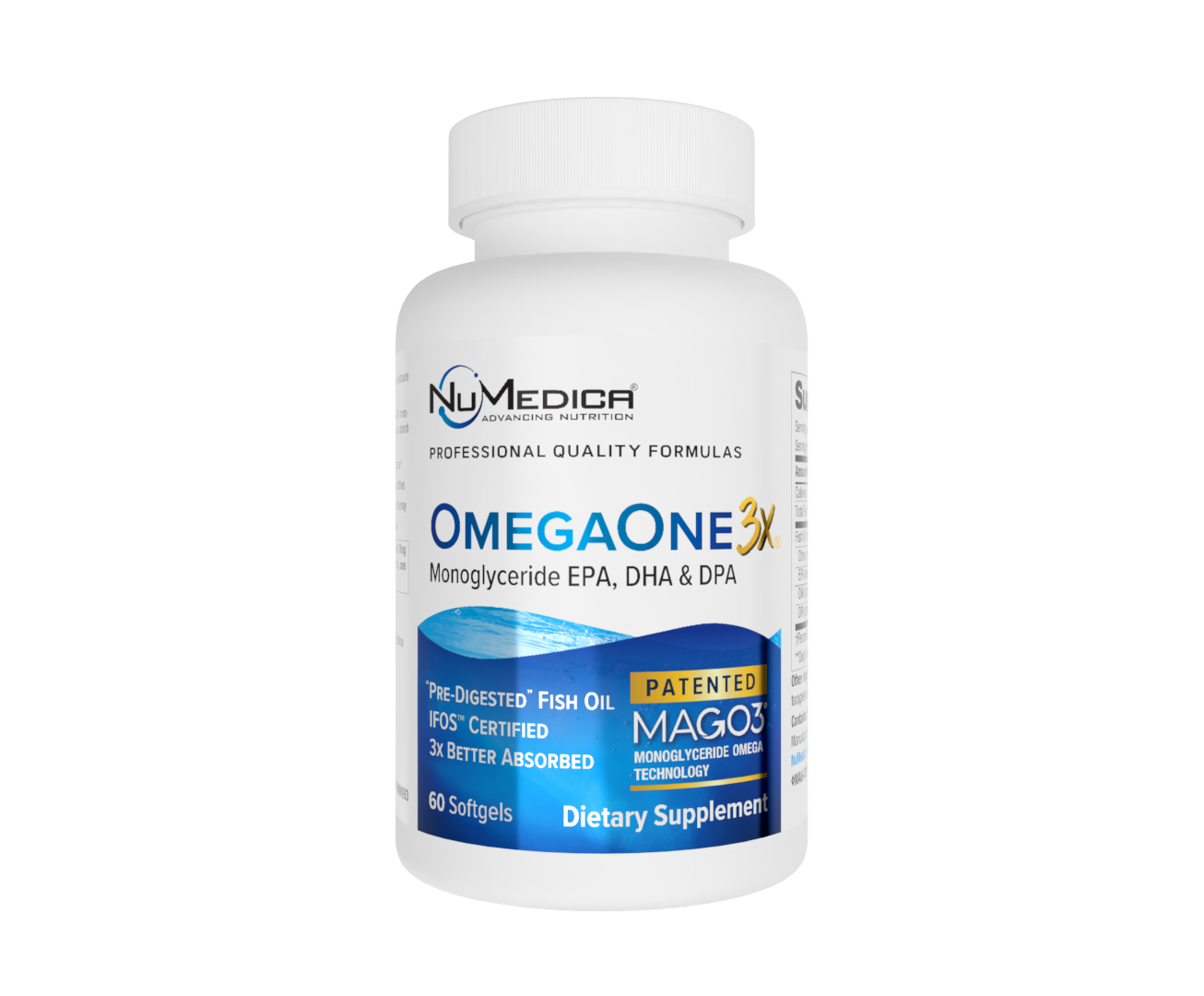
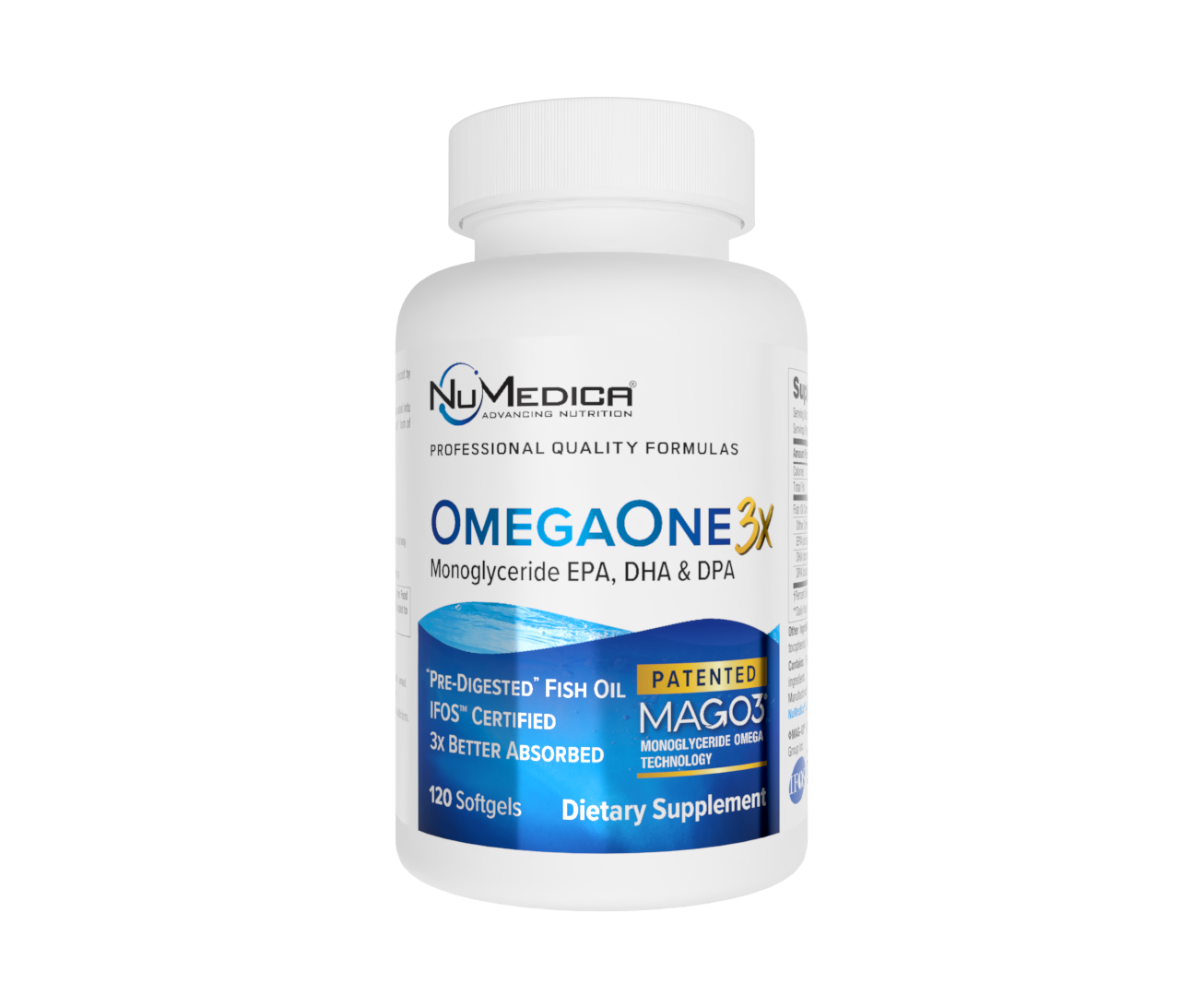
Omega-3 fatty acids are some of the most important nutrients you can add to your daily routine. They are foundational building blocks the body uses for cellular health, and most modern diets simply do not provide enough of them. The challenge with traditional fish oil supplements is that your body has to enzymatically break them down before it can absorb them, and that process is naturally less efficient as you age, when fat absorption slows, or simply when you do not take them with enough dietary fat.
OmegaOne 3x™ was built to solve that.
It delivers EPA, DHA, and DPA omega-3s in their most readily absorbable form: monoglycerides.* Using a patented enzymatic process called MAG-O3®, the oil is “pre-digested” before it ever reaches your bottle, creating a form of fish oil your body can absorb directly, without the additional digestive steps required by traditional fish oils. The result is up to three times better absorption of EPA and DHA compared to common ethyl ester (EE) fish oil forms.*
If you want a smarter, faster-absorbing approach to your daily omega-3, this is where it begins.
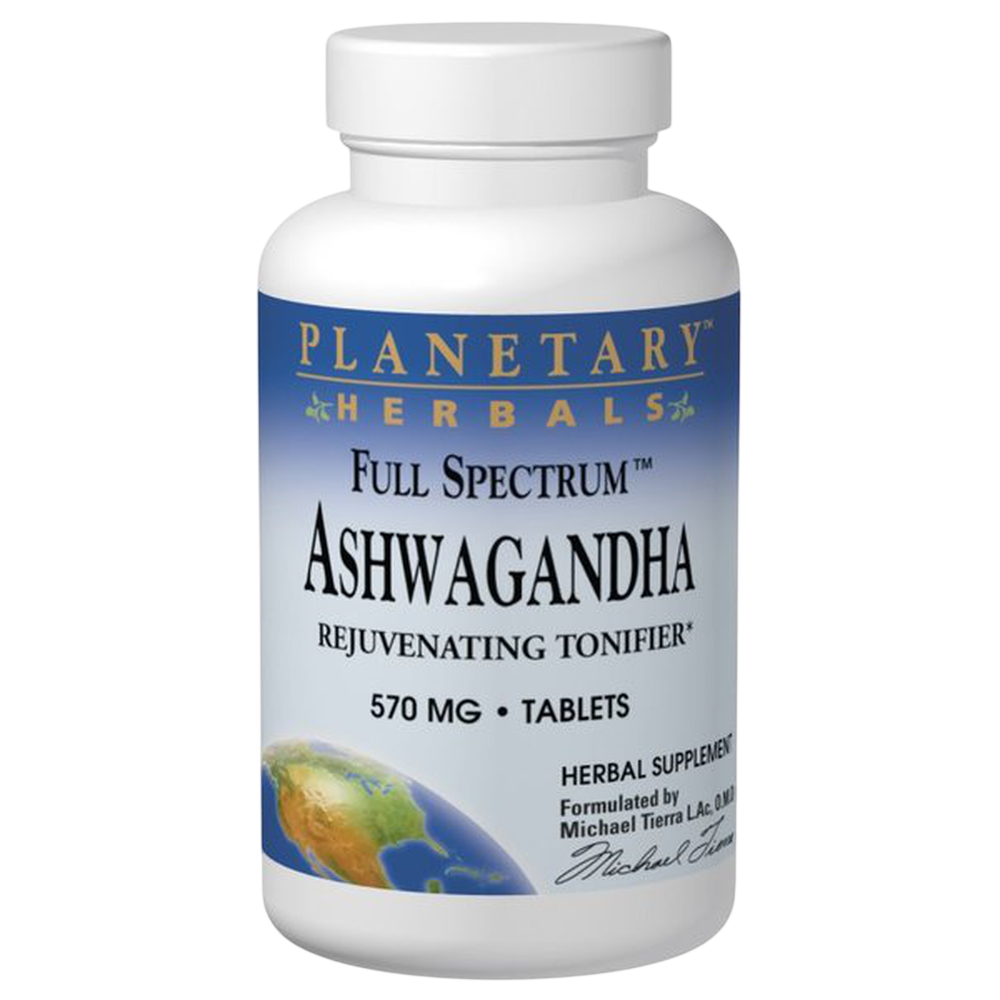
Modern life rarely slows down. Schedules tighten, demands pile up, and the body’s stress response runs longer than it was ever meant to. Over time, that constant low-grade pressure shows up everywhere, in your energy, your sleep, your focus, and your sense of calm. For thousands of years, traditional Ayurvedic practice has turned to one botanical above all others to help meet that pressure with steady, resilient calm: ashwagandha.
Ashwagandha, Full Spectrum brings that time-honored tradition into a clean, simple daily tablet.
It is a focused, single-ingredient formula featuring 570 mg of ashwagandha (Withania somnifera) per tablet, including both whole ashwagandha root and a concentrated root extract.* Ashwagandha is one of the most studied and widely used adaptogenic botanicals in the world, valued for its role in supporting the body’s healthy response to everyday stress, supporting a calm and relaxed mind, and supporting natural resilience.*
If you are looking for a clean, well-studied daily adaptogen to help meet the demands of modern life, this is where it begins.
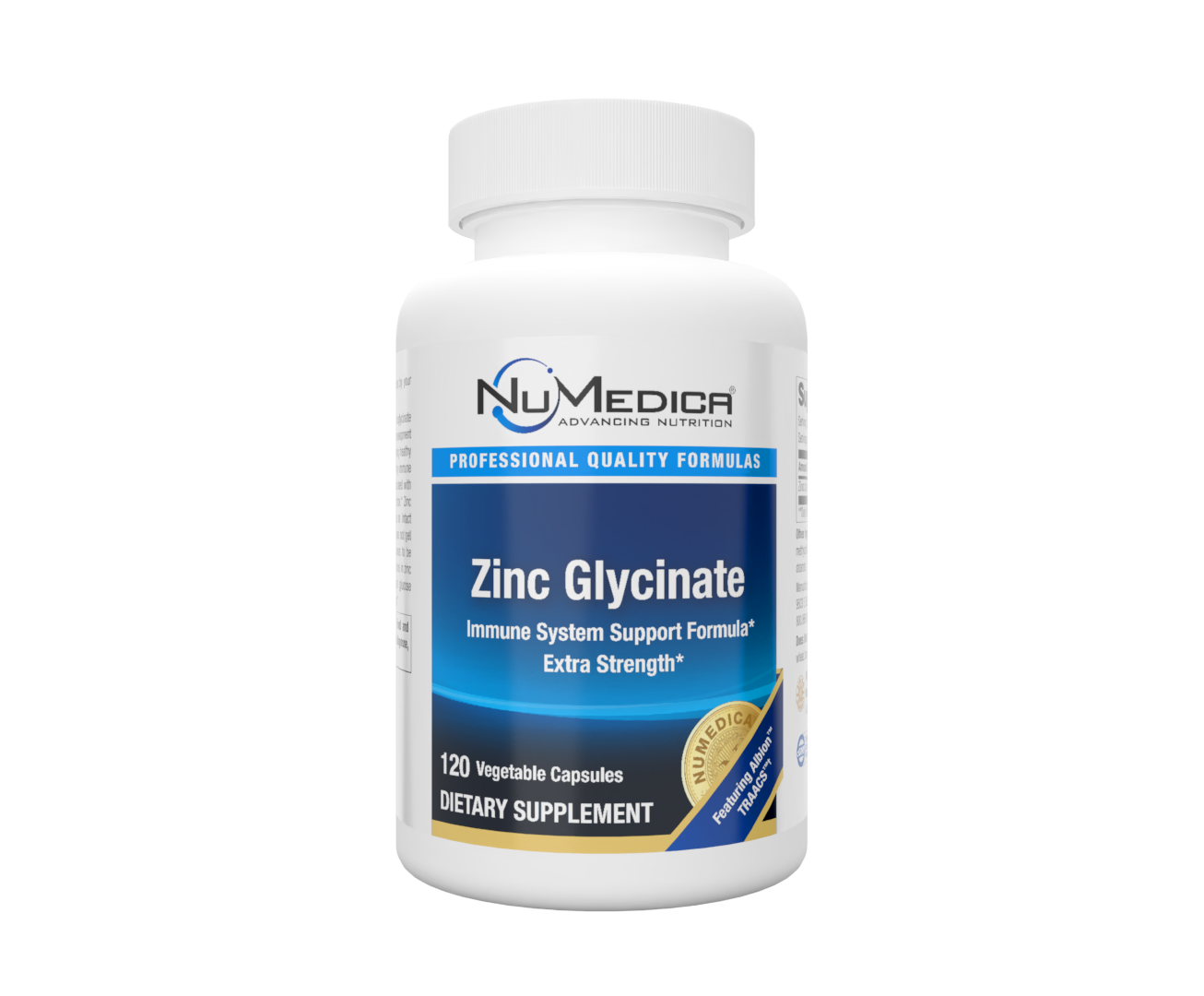
Zinc Glycinate features the fully reacted TRAACS® zinc bisglycinate chelate by Balchem Corporation. Zinc is essential for the development and proper functioning of the reproductive organs, including healthy prostate function, and has been shown to support healthy immune system function.* Zinc also supports enzyme activity associated with tissue synthesis, energy metabolism, and bone mineralization.* Zinc Glycinate is readily bioavailable and easily absorbed as an intact chelate.* It is superior to other forms of zinc because it does not get ionized in the gut before it is absorbed.* Instead, it appears to be metabolized in the body right at the target tissue.* Deficiencies in zinc can lead to an impaired immune system, decreased glucose metabolism, hormonal imbalance and slower wound healing.*
